Introduction
Mechanism of RNAi
siRNA Knockdown
shRNA Knockdown
Key differences between siRNA and shRNA
Advantages and limitations
Future perspectives
References
Further reading
The article contrasts siRNA and shRNA by focusing on how their modes of delivery and intracellular processing determine the stability, reversibility, and scale of gene knockdown. It emphasizes practical decision-making for researchers choosing between short-term modulation and long-term gene suppression.
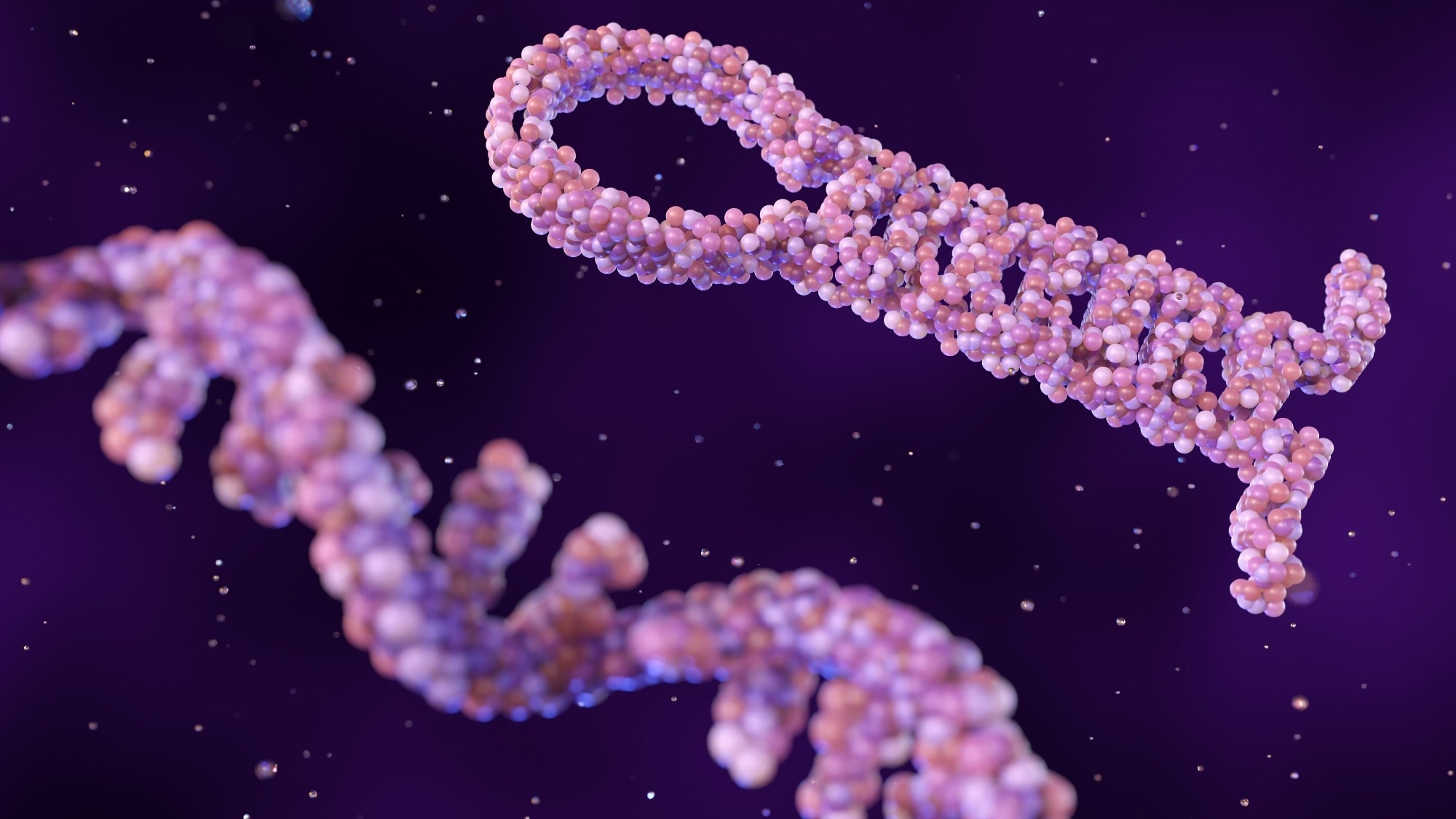 Image credit: Love Employee/Shutterstock.com
Introduction
Gene knockdown is a common method for studying gene function by reducing messenger ribonucleic acid (mRNA) levels without altering the deoxyribonucleic acid (DNA). Among the available techniques, RNA interference (RNAi) is widely used because it leverages endogenous cellular pathways to target and silence specific genes. RNAi uses small RNA molecules to promote the sequence-specific degradation of target RNAs and prevent them from being translated into proteins. The two main RNAi-based strategies are small interfering RNA (siRNA) for temporary effects, and short hairpin RNA (shRNA) for lasting results.1
This article explains the differences between siRNA and shRNA knockdown methods, comparing their RNAi mechanisms, experimental workflows, advantages, limitations, and real-world applications for gene silencing studies.
Mechanism of RNAi
The RNAi process begins when a double-stranded RNA (dsRNA) enters the cell and is recognized by the RNAi machinery. The enzyme Dicer, a ribonuclease (RNase) III endoribonuclease, cuts the dsRNA into short fragments called siRNAs, typically 21–23 nucleotides in length. These siRNAs are loaded into the RNA-induced silencing complex (RISC), where the duplex is unwound and one strand, known as the guide strand, is retained. RISC uses this guide strand to locate a complementary mRNA, and the Argonaute endonuclease within RISC cleaves the target mRNA, leading to its degradation and reduced protein production. This mechanism enables post-transcriptional gene silencing without altering the underlying DNA sequence.2
siRNA Knockdown
siRNA is a short, synthetic double-stranded RNA molecule designed to be complementary to a specific mRNA sequence. Once delivered into the cytoplasm, the siRNA duplex is incorporated into RISC, where the passenger strand is discarded, and the guide strand directs cleavage of the target mRNA, resulting in reduced protein expression. Because siRNA molecules are not replicated and diluted during cell division, gene silencing is transient, typically lasting a few days. siRNA can be introduced into cells by lipid-based transfection or electroporation, making it well-suited for rapid, short-term knockdown experiments and high-throughput screening applications.3
shRNA Knockdown
shRNA is engineered to form a stem–loop structure and is produced endogenously within the cell rather than being delivered in its active form. Host cells transcribe the shRNA cassette from plasmid or viral vectors, usually under the control of RNA polymerase III or II promoters. The primary transcript folds into a hairpin structure and is processed by cellular RNase enzymes, primarily Dicer, into siRNA-like duplexes, which are subsequently loaded into the RISC. Because shRNA expression is maintained from an integrated or episomal vector, gene knockdown can be sustained for extended periods. This property makes shRNA particularly useful for generating stable knockdown cell lines and for experiments requiring long-term or heritable gene suppression.1
Key differences between siRNA and shRNA
siRNA and shRNA rely on the same cellular RNAi machinery but differ in their experimental behavior and applications. siRNA is delivered as a preformed RNA duplex and produces an immediate reduction in target mRNA levels that diminishes over time due to degradation and cell division. This transient effect makes siRNA suitable for short-duration experiments. In contrast, shRNA is expressed continuously from plasmids or viral vectors, resulting in stable, sustained knockdown that can persist for weeks or longer.4
Delivery strategies also differ substantially. siRNA is typically introduced using lipid-based reagents or electroporation, which are technically straightforward but often require repeated administration. shRNA delivery depends on DNA-based vectors and frequently uses viral systems, increasing experimental complexity but enabling stable integration. While siRNA is easier to scale and chemically modify, higher concentrations can increase off-target effects and cytotoxicity. shRNA generally operates at lower effective copy numbers, which may reduce off-target activity, but vector integration introduces biosafety and insertional mutagenesis considerations.4
Advantages and limitations
siRNA and shRNA each present distinct advantages depending on experimental goals. siRNA is chemically synthesized and rapidly induces gene silencing within hours of delivery, making it ideal for short-term studies, target validation, and applications that require reversibility. Because siRNA acts exclusively at the post-transcriptional level and does not integrate into the genome, it avoids permanent genetic alterations. However, the need for repeated dosing and the risk of dose-dependent off-target effects and innate immune activation represent important limitations.4
In contrast, shRNA is delivered as a DNA construct and continuously expressed by the host cell, enabling prolonged gene knockdown. This makes shRNA advantageous for long-term studies, stable cell line generation, and many in vivo applications. Effective shRNA use requires careful vector and promoter design, efficient nuclear delivery, and controlled expression levels to avoid saturation of the endogenous microRNA pathway. Excessive shRNA expression can disrupt normal RNA processing and lead to cellular toxicity, while genomic integration introduces potential insertional risks.4
Download your PDF copy now!
Future perspectives
Advances in RNAi technology continue to improve the specificity and reliability of gene knockdown approaches. Improved computational design algorithms and large-scale screening datasets have reduced strand selection bias and miRNA-like off-target effects. In parallel, the development of microRNA-based shRNA scaffolds and optimized vector architectures has enhanced expression control and minimized cellular stress. Genome-wide expression profiling studies have also enabled systematic comparisons between RNAi and CRISPR-based gene disruption technologies, highlighting their complementary strengths.5
While RNAi remains valuable for partial and tunable gene suppression, CRISPR methods provide more consistent, complete loss-of-function outcomes. Using both approaches in combination can strengthen functional validation and improve confidence in gene–phenotype relationships. Together, continued refinement of RNAi tools and integration with genome-editing technologies are shaping more precise and informative strategies for gene function analysis.5
References
- Rossi, M., Steklov, M., Huberty, F., Nguyen, T., Marijsse, J., Jacques-Hespel, C., Najm, P., Lonez, C & Breman, E. (2023). Efficient shRNA-based knockdown of multiple target genes for cell therapy using a chimeric miRNA cluster platform. Molecular Therapy Nucleic Acids. 34. DOI:10.1016/j.omtn.2023.102038, https://www.sciencedirect.com/science/article/pii/S2162253123002561
- Agrawal, N., Dasaradhi, P. V. N., Mohmmed, A., Malhotra, P., Bhatnagar, R. K., & Mukherjee, S. K. (2003). RNA interference: biology, mechanism, and applications. Microbiology and molecular biology reviews. 67(4). 657-685. DOI:10.1128/mmbr.67.4.657-685.2003, https://journals.asm.org/doi/10.1128/mmbr.67.4.657-685.2003
- Zhang, J., Chen, B., Gan, C., Sun, H., Zhang, J., & Feng, L. (2023). A comprehensive review of small interfering RNAs (siRNAs): mechanism, therapeutic targets, and delivery strategies for cancer therapy. International journal of nanomedicine. 18. 7605-7635. DOI:10.2147/IJN.S436038, https://www.dovepress.com/a-comprehensive-review-of-small-interfering-rnas-sirnas-mechanism-ther-peer-reviewed-fulltext-article-IJN
- Rao, D. D., Vorhies, J. S., Senzer, N., & Nemunaitis, J. (2009). siRNA vs. shRNA: similarities and differences. Advanced drug delivery reviews. 61(9). 746-759. DOI:10.1016/j.addr.2009.04.004, https://www.sciencedirect.com/science/article/pii/S0169409X09000969
- Smith, I., Greenside, P.G., Natoli, T., Lahr, D.L., Wadden, D., Tirosh, I., Narayan, R., Root, D.E., Golub, T.R., Subramanian, A. & Doench, J. G. (2017). Evaluation of RNAi and CRISPR technologies by large-scale gene expression profiling in the Connectivity Map. PLoS biology. 15(11). DOI:10.1371/journal.pbio.2003213, https://journals.plos.org/plosbiology/article?id=10.1371/journal.pbio.2003213
Further Reading
Last Updated: Jan 19, 2026