In a state already saturated with anti-tobacco messaging, schools backed by dedicated prevention funding showed stronger education, greater student engagement, and meaningfully lower tobacco use among adolescents.
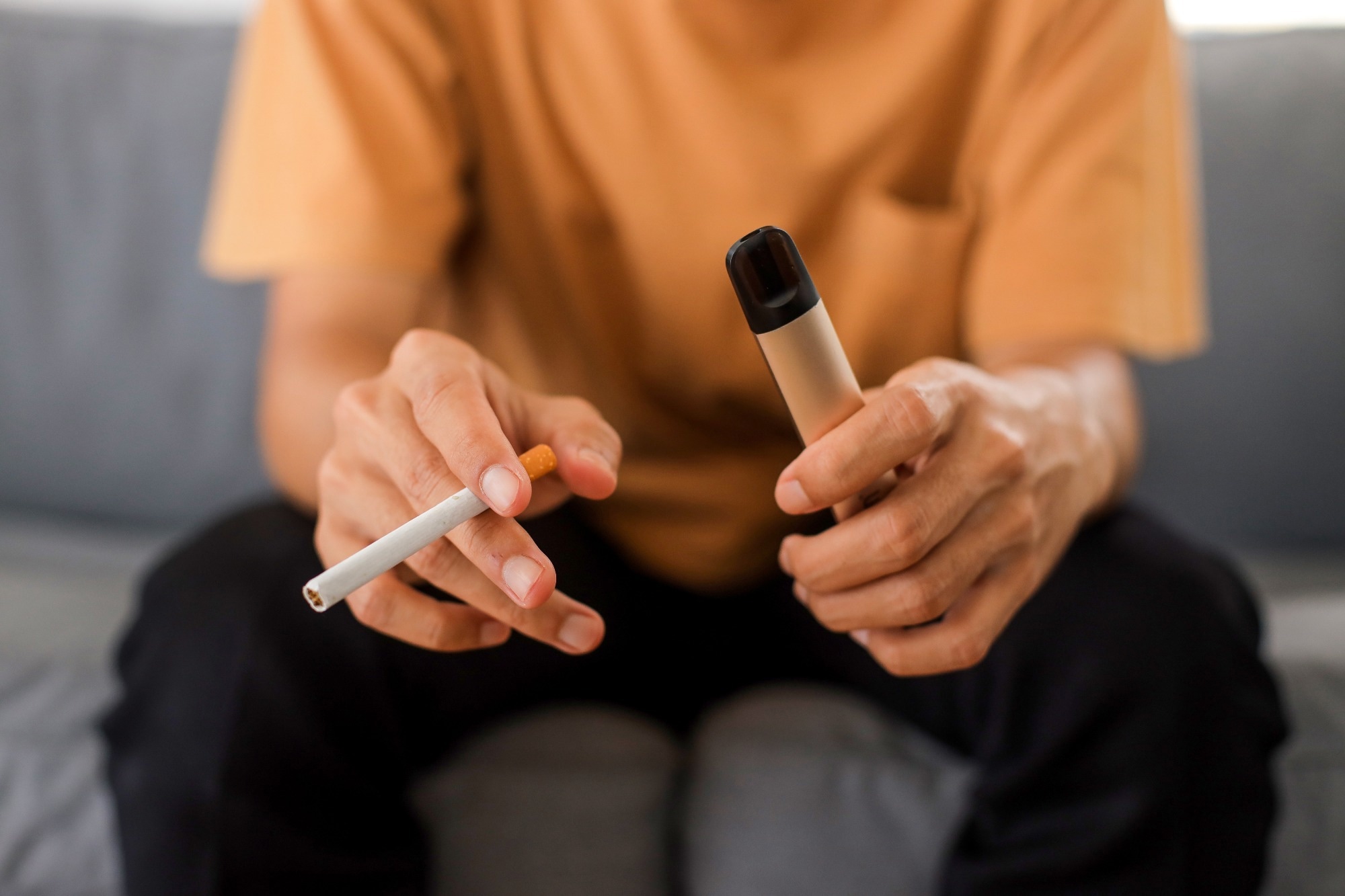
Study: California's School-Based Tobacco Use Prevention Program After Proposition 56: Results From a Statewide Evaluation. Image Credit: StockLab / Shutterstock
California has long had a school tobacco control program in place – the TUPE. This was expanded in 2016 in accordance with Proposition 56. A recent study in the Journal of Adolescent Health explored whether this step was associated with improved tobacco control among youth.
Origins of California’s Tobacco Prevention Efforts
Proposition 99 was a 1988 California referendum that approved a 25-cent increase in the cigarette tax. Part of the increased revenue went toward strengthening and broadening the anti-tobacco programs overseen by the California Department of Public Health and the California Department of Education (CDE).
The Department of Public Health conducts the California Tobacco Prevention Program, comprising educational media campaigns at the community and state levels; statewide tobacco use surveillance; and program evaluation. The CDE administers TUPE in schools targeting tobacco use by young people.
These programs are widely considered responsible for expediting the decline in tobacco use in California. They have helped reduce lung cancer incidence and mortality rates.
Structure and Funding Mechanisms of TUPE
TUPE operates through multiple mechanisms:
- County Technical Assistance grants that fund basic county-level TUPE programs
- Tier 1 grants that fund school district-level initiatives like implementing tobacco-free school policies and surveillance of tobacco use among students
- Tier 2 grants that fund more comprehensive tobacco prevention and cessation programs
- American Indian Education Center grants that target tobacco use prevention among American Indian youth
Most TUPE funding is distributed via Tier 2 grants. These are competitively awarded in a three-year cycle, targeting students in grades 6–12. They fund a range of initiatives, including prevention education, tobacco cessation support, peer counseling, community- and family-focused interventions, and staff development.
Proposition 56 and Expanded Prevention Funding
Declining tobacco usage progressively reduced tax revenue, necessitating additional funding measures for these programs. As a result, California voters approved Proposition 56, which increased the tax on cigarettes by $2 per pack, also raising taxes on vapes and other tobacco products. New funds were allocated to tobacco use prevention, including an additional $55 million for TUPE during 2017–2019.
These funds supported state-level media campaigns targeting vaping among youth. Prior evaluations found these campaigns were associated with higher cessation attempts among teens who vaped, and with lower susceptibility to future vaping among never-vaping youth.
However, TUPE still covered less than half of public middle and high school students. If divided equally between all school districts, the available funds would not cover a high-quality intervention in a single school. The CDE prioritized quality over quantity, funding a multipronged tobacco use prevention program in competitively selected schools.
Rationale for Comparing TUPE and Non-TUPE Schools
Historically, school-based programs have produced only small effects on tobacco prevention. These effects are likely more durable in states like California that already have strong anti-tobacco messaging. Conversely, the presence of the statewide program also makes it more difficult to tease out the impact of TUPE by itself.
For this reason, the authors of the current study chose to compare TUPE-funded schools with non-TUPE-funded schools.
Study Design and Data Sources
The data came from the 2019–2020 California Student Tobacco Survey – the last year of that funding cycle. The state-representative student survey included 160,106 students in total: 49,244 from TUPE-funded schools and 110,862 from non-TUPE-funded schools, all in grades 8, 10, and 12. The study covered 358 schools.
The researchers used generalized linear mixed-model logistic regression to examine the association between TUPE funding and reduced student tobacco use.
Factors Influencing Tobacco Use Risk
The analysis showed that multiple factors affected the risk of tobacco use other than TUPE. These included region, sex, grade, educational status of parents, smoking or vaping exposure in the family, mental health, and ethnicity.
Demographic Differences Between School Groups
TUPE school students in the study were twice as likely to be from Northern California (19% vs 10%) and to be Asian (19% vs 8%). This was accounted for in the analyses.
Asians were the least likely to use tobacco, compared to Hispanic or Latino students, who made up the largest subgroup. Students from the Bay Area or Northern California were also more likely to use tobacco. Both Asian and Northern California students attended TUPE schools in higher numbers, which, according to the authors, may have influenced unadjusted comparisons but were controlled for in multivariable analyses.
Exposure to Tobacco-Related Advertising
Exposure to tobacco-related advertisements was similar across TUPE and non-TUPE students. Most advertising discouraged rather than promoted tobacco use. Students found it easier to obtain vapes than cigarettes, irrespective of TUPE.
Vaping advertising was reported by ~16–17% of students, while anti-vaping advertisements were reported by 36–39%. Similarly, about 28–29% reported anti-smoking advertisements compared to around 11% who reported exposure to smoking advertisements.
School-Based Tobacco Education
TUPE students were more likely to receive school-based education on the harms of vaping, cigarettes, and smokeless tobacco, secondhand smoke, and vapor than non-TUPE students.
Overall, 71% of TUPE students received messaging opposing all tobacco use, vs ~64% of non-TUPE students.
Participation in Tobacco Prevention Activities
While 15% of TUPE students participated in three or more school activities opposing tobacco use, only about 10% of non-TUPE students did.
Tobacco Use Outcomes
After adjusting for personal and school risk factors, tobacco use was lower among TUPE students at 6.5%, vs 8% of non-TUPE students.
Interpretation and Public Health Implications
Students were heavily exposed to messaging that opposed all forms of tobacco use, irrespective of TUPE funding.
 California's school-based tobacco prevention program linked to lower youth smoking, vaping rates